Customary Distance: Feet, Yards & Miles Worksheets
Calculate longer customary distances: 5,280 feet in a mile and 1,760 yards in a mile with clean integer solutions.
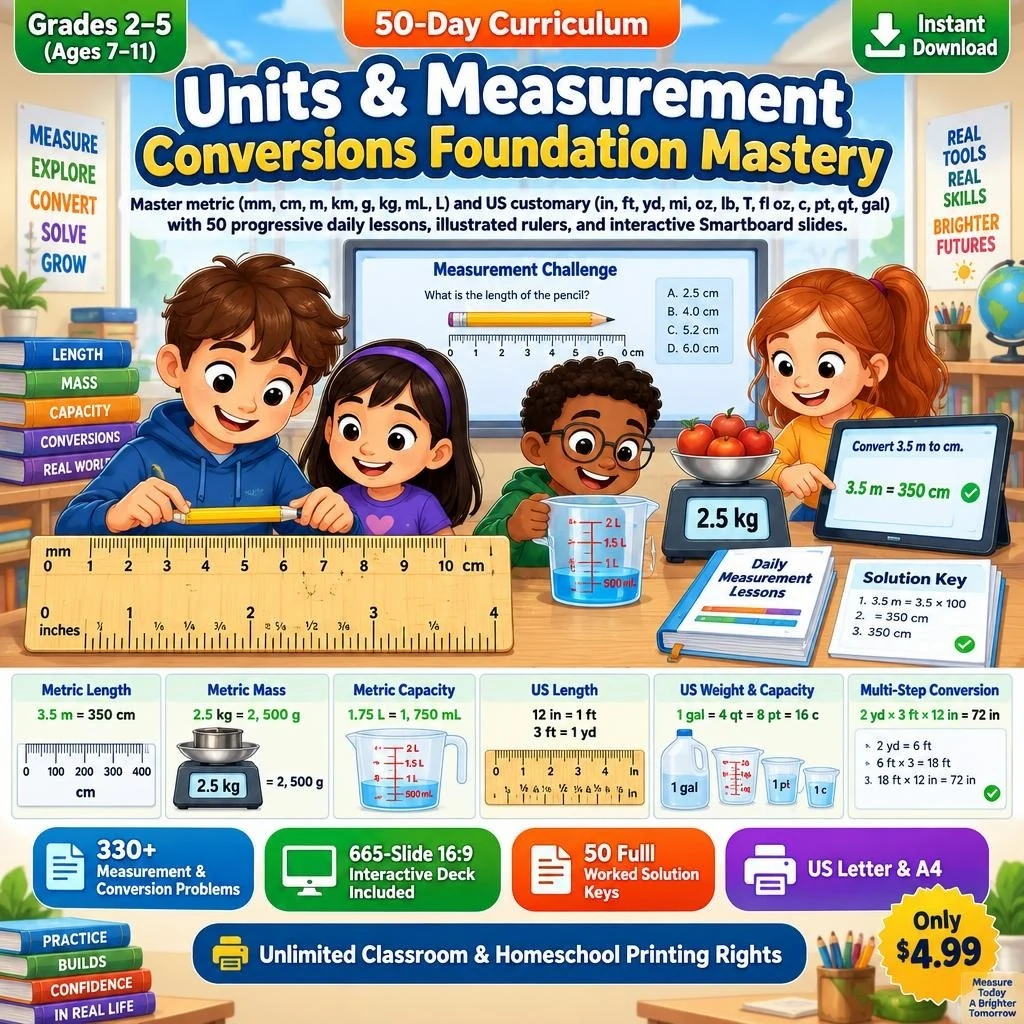 Cover$4.99
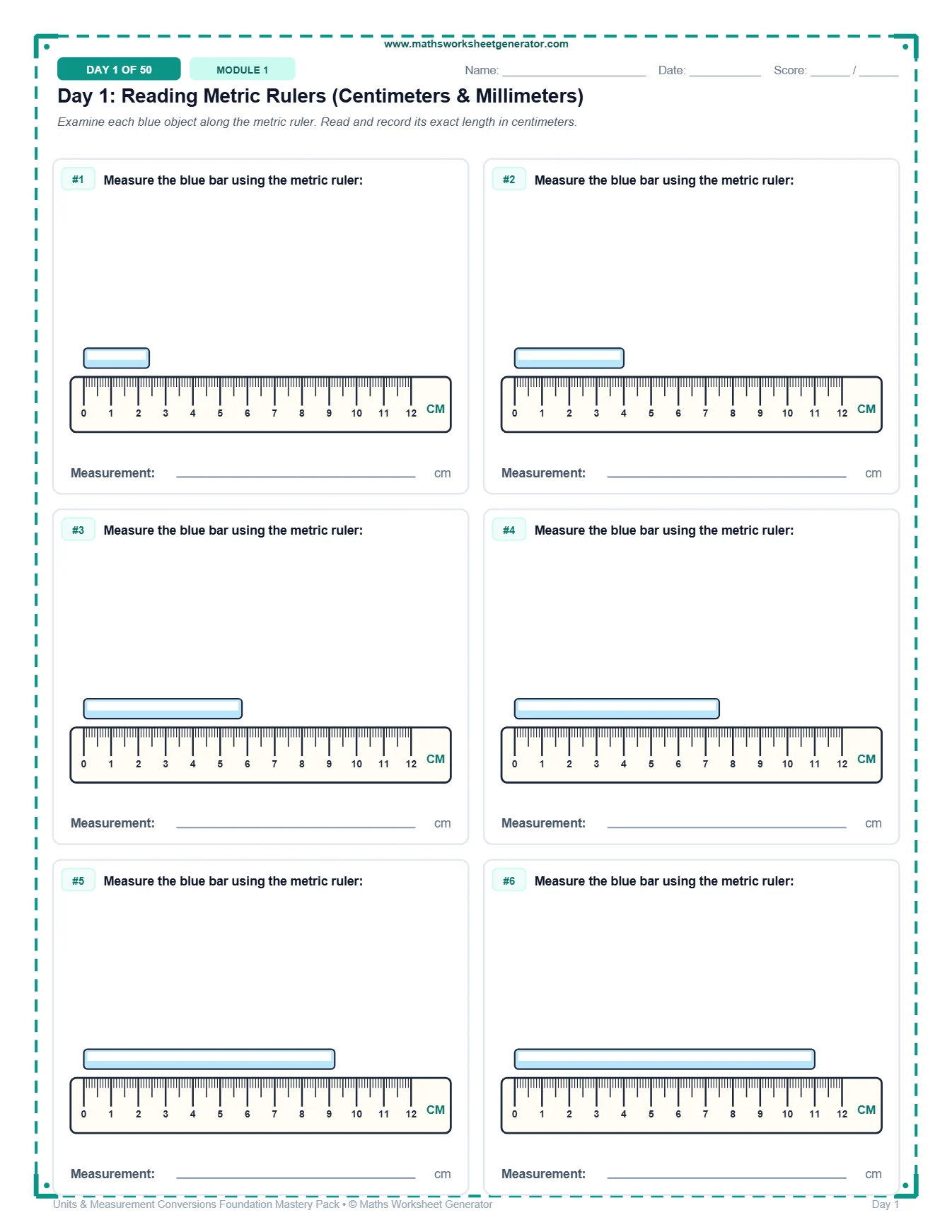 Metric Length$4.99
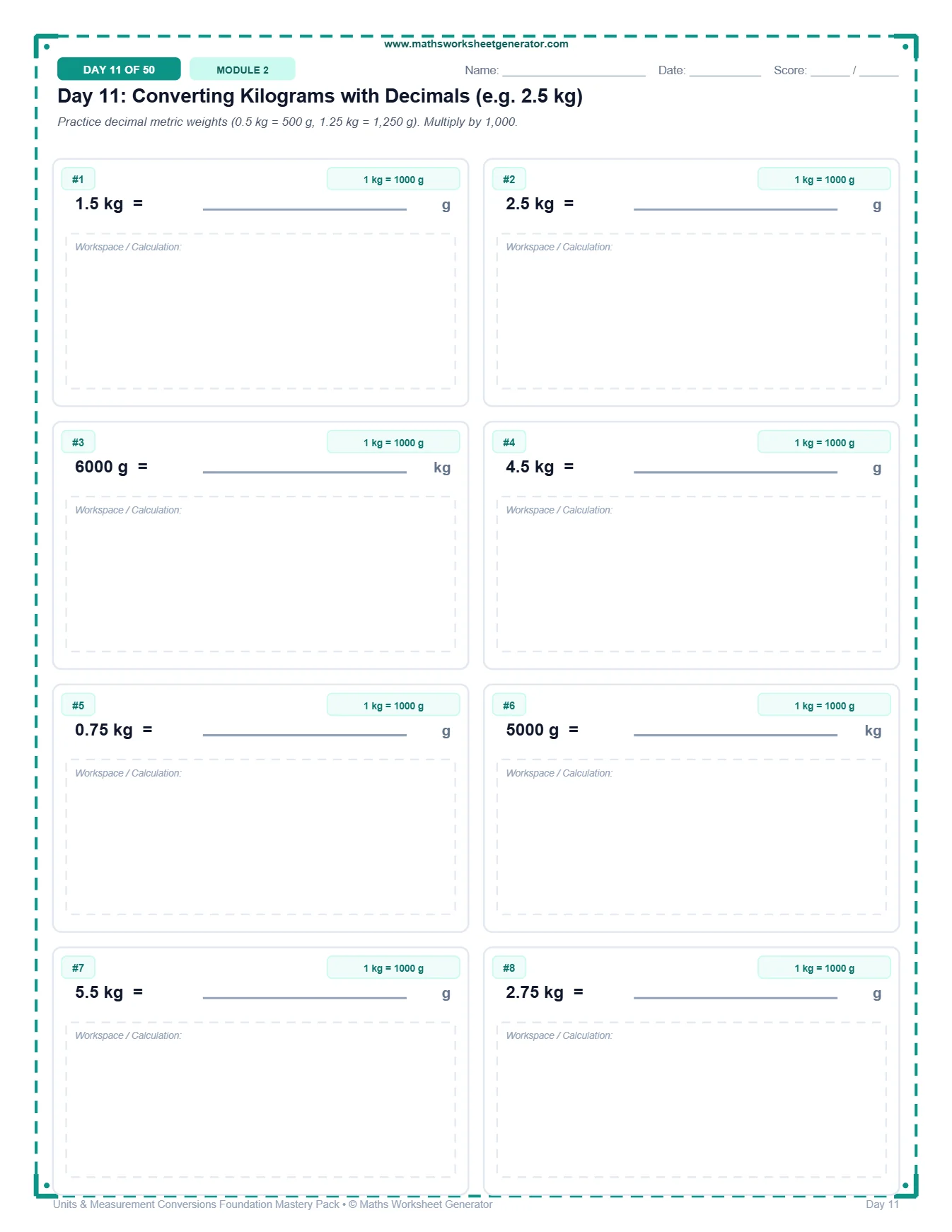 Metric Mass$4.99
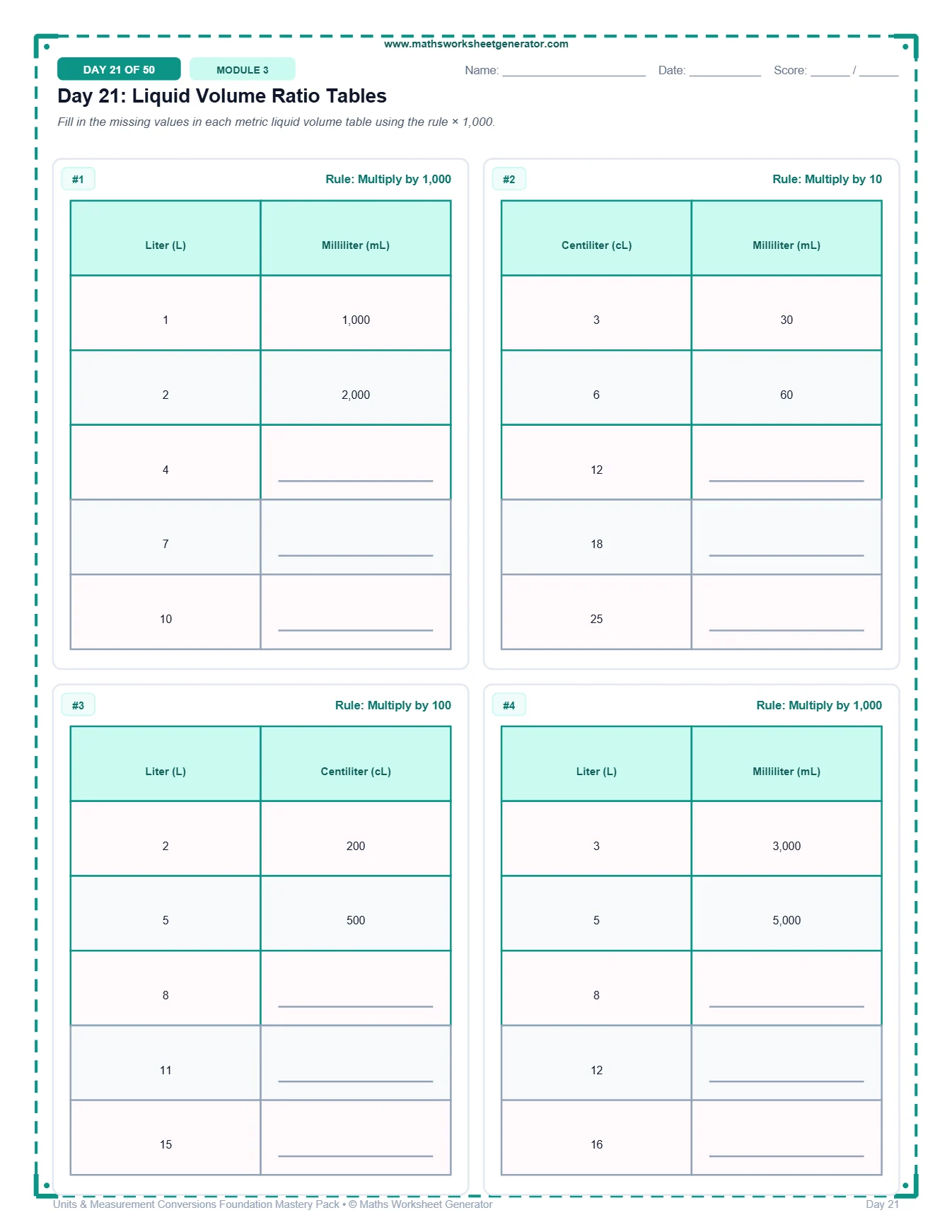 Function Tables$4.99
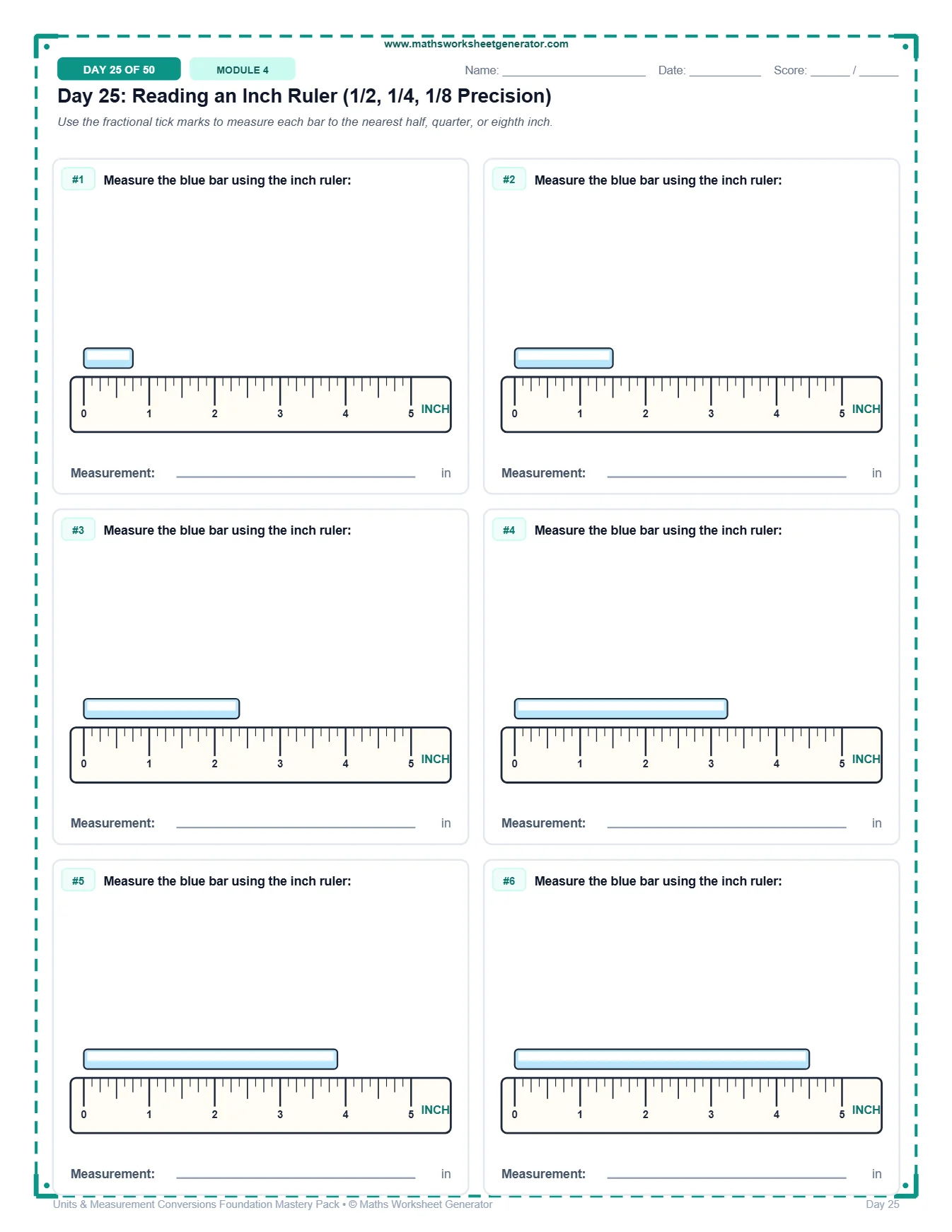 Customary Length$4.99
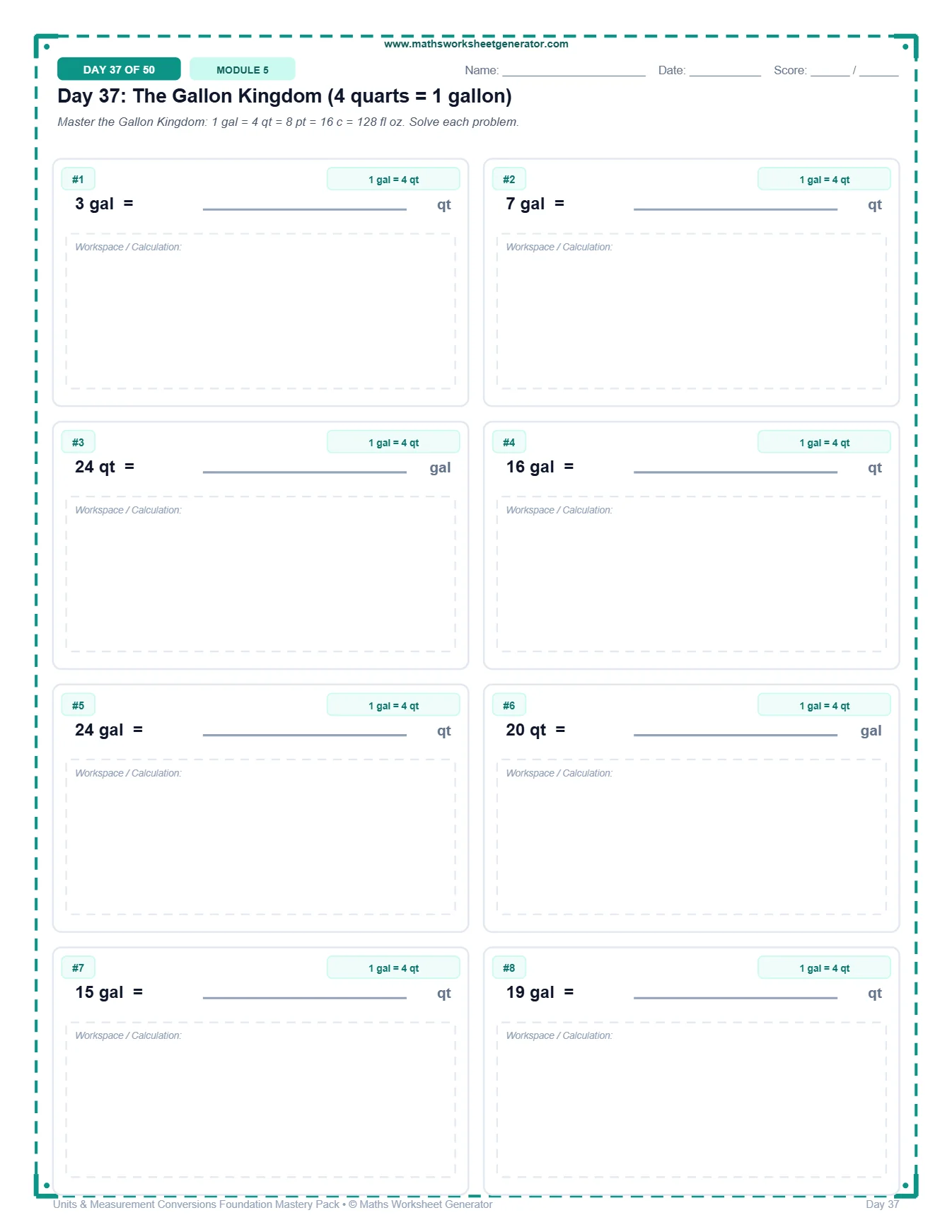 Capacity Hierarchy$4.99
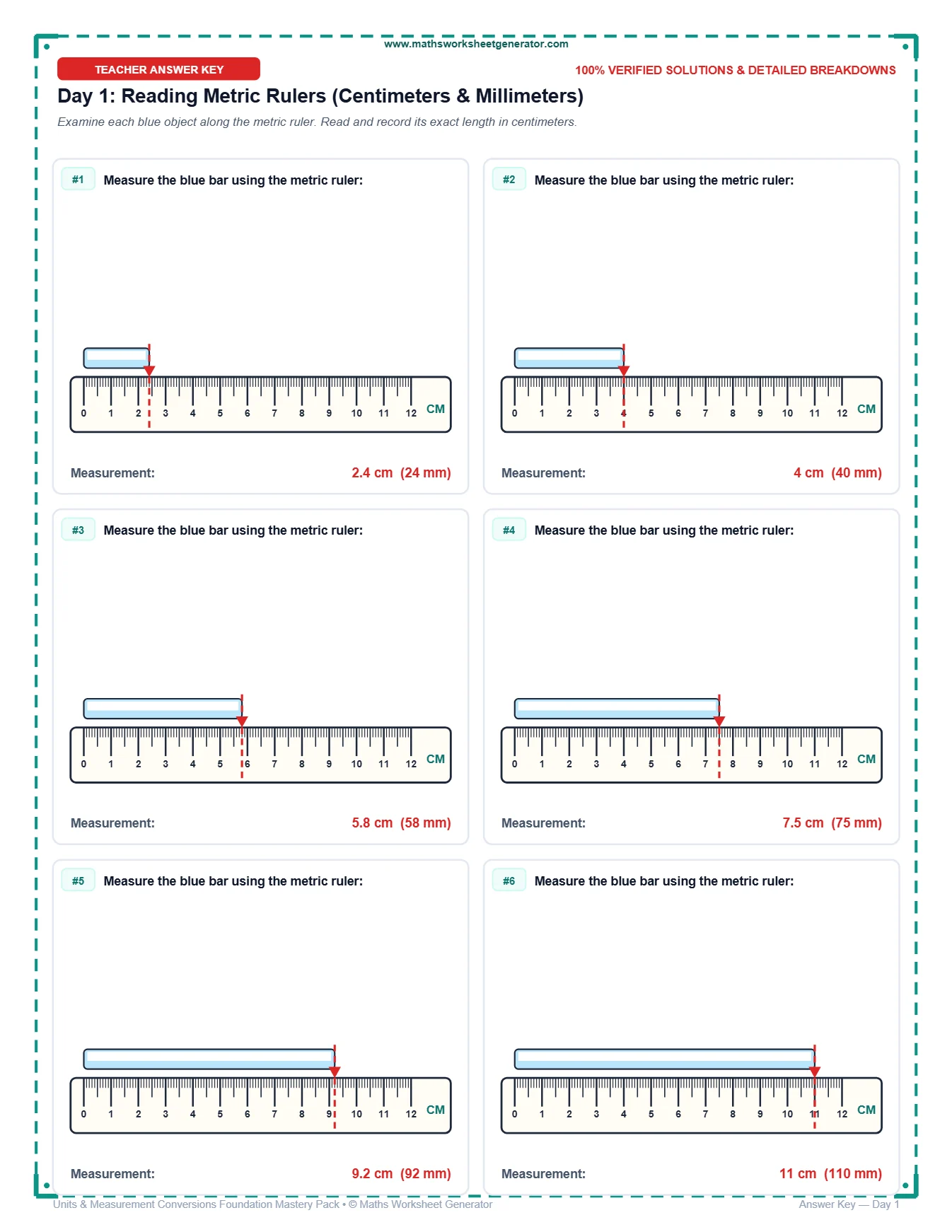 Full Solutions$4.99
Measurement System & Dimension
Choose Worksheet Mode
Parameters & Problems Count
Worksheet Header Details
Generated fresh in your browser. Vector rendering ensures crisp printing.
Instant Sheet Preview
📄 Real-time High-DPI Preview.
About this worksheet
Upper elementary curricula introduce landmark distances: 1 mile = 1,760 yards = 5,280 feet.
Teaching tip: Connect distance conversions to sports track lengths (400 m or 440 yards = 1/4 mile) and highway mile markers.
A Units & Measurement Conversion Worksheet Generator built for elementary & middle school mastery
Mastering measurement units and conversions is a foundational milestone across Grades 2 through 6.Maths Worksheet Generator creates high-precision, printable measurement worksheets with clean numbers, authentic vector rulers, and zero floating-point rounding errors.
Generate worksheets for Direct Unit Conversions (larger-to-smaller, smaller-to-larger, whole numbers and terminating decimals), Comparing Measurements (<, >, =), Mixed Units Addition & Subtraction with Non-Base-10 Regrouping, 2-Column Unit Conversion Ratio Tables (CCSS 4.MD.A.1), and Visual Ruler Reading.
Comprehensive unit support spans both Metric (length: mm, cm, m, km; mass: g, kg; volume: mL, L) and US Customary (length: in, ft, yd, mi; weight: oz, lb, ton; liquid capacity: fl oz, c, pt, qt, gal).
Every generated worksheet features clean problem grids, student name/date lines, and a full teacher worked answer key. Download as high-resolution vector PDF or editable PowerPoint (PPTX) slides for classroom smartboards.
How to Use the Generator
1. Choose Measurement System & Dimension: Select Metric, US Customary, or All Systems, and isolate Length, Mass/Weight, or Liquid Capacity.
2. Select Problem Mode: Choose between Direct Conversions, Comparing Units (<, >, =), Mixed Units Addition/Subtraction, Conversion Ratio Tables, or Visual Ruler Reading.
3. Configure Difficulty & Sub-Options: Select conversion direction (larger to smaller, smaller to larger), number type (whole numbers or decimals), regrouping requirement for compound arithmetic, or ruler fractional precision (1/2, 1/4, 1/8 in).
4. Export & Print: Select your page size (A4, US Letter, or Pinterest Pin 1000×1500), then click Download PDF for ready-to-print vector worksheets or Editable PPTX for interactive classroom smartboard lessons.
Frequently Asked Questions & Teaching Tips
Why is regrouping in mixed units difficult for students, and how does this engine help?
In standard base-10 arithmetic, borrowing and carrying always operate with 10. In customary measurement, the regrouping base varies by unit: 12 for inches/feet, 16 for ounces/pounds, 3 for feet/yards, and 4 for quarts/gallons. Our mixed operations generator includes a dedicated 'Require Regrouping' mode that guarantees students practice carrying and borrowing across these non-decimal unit bases.
How does the generator guarantee clean numbers without messy repeating decimals?
All conversions are reverse-derived using base-unit integer math. When generating smaller-to-larger conversions (like inches to feet or ounces to pounds), the algorithm picks a clean target answer first and multiplies backward to form the prompt. This eliminates messy recurring decimals like 4.1666... ft.
What Common Core State Standards (CCSS) are covered?
The engine covers CCSS 2.MD.A.1 (measuring with standard rulers), CCSS 3.MD.A.2 (mass and volume), CCSS 4.MD.A.1 (relative sizes of measurement units within one system and 2-column conversion tables), CCSS 5.MD.A.1 (multi-step conversions and decimal place value shifts), and CCSS 6.RP.A.3.d (unit rate reasoning).
Looking for word problems and story scenarios involving measurement?
Check out our dedicated Math Word Problems Generator. It provides real-world measurement stories, multi-step shopping budgets, elapsed time, and perimeter problems with spacious student workspaces.